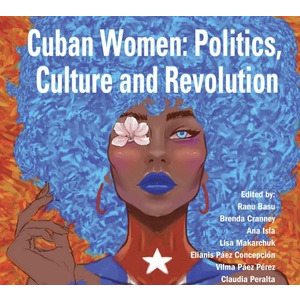
CANADIAN WOMAN Studies publishes its journal of innovative feminist writing once or twice a year, with a particular theme for each issue. This issue, Cuban Women: Politics, Culture, and Revolution, is a result of Canadian-Cuban feminist discussion and collaboration. This resulted in papers, poetry, artwork, and other pieces on the “unique role of Cuban women in the revolutionary process, their struggles for rights and emancipation, as well as celebrating their many accomplishments and successes through radical art, culture, and literary works.”
The issue aims to amplify Cuban women’s voices, to help us understand their lives, and to draw attention to their often-overlooked past and present achievements. It also aims to contribute to a better understanding of the complex relationships among gender, politics, and culture in a revolutionary context. The opening commentary recognises that Cuban women have been involved in revolutionary movements since the early 1800s, and highlights the importance of community-based outreach programmes initiated throughout the country under the leadership of women’s organisations.
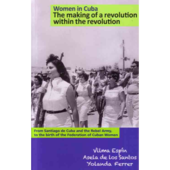
The collection is in three sections. Movements, Memories, and Revolutionary Institutions includes accounts of the resistance of women in colonial Cuba, including enslaved Afro-Cuban women pre-Revolution and their struggles for emancipation. Also included are discussions on the leadership of Vilma Espín in establishing the Federation of Cuban Women in 1960, and on the Literacy Campaign in 1961, initiated by Fidel, that revolutionised the field of education with young women at the forefront. Fidel referred to this incredible achievement as the “revolution within the Revolution” as it established a nationwide institutional basis empowering women. This political work was often celebrated through art and culture, and an article in this section reviews powerful messages conveyed over time by revolutionary posters.
The section Power, Gender Equity, and Politics addresses questions of race, sexuality, and LGBT activism in Cuba, ending with a discussion of the Cuban Family Code which has provided formal guidelines on issues of gender equality. The section Lived Experience of the Revolution addresses the lives and struggles of Cuban women today, and their strength and resilience over the long period of the blockade, through a process of story-telling.
The final two articles explore Canadian links to Cuba, including solidarity work and volunteer brigades. Together the articles in the journal blend lived experience and academic expertise to present a picture of the uniquely crucial importance of women in the Cuban Revolution, and the role of Cuban women as leaders and active agents today. The spirit and determination of the “Revolution within the Revolution” – the drive towards equality characterised by solidarity and cooperation – is still present in Cuba. In addition to the articles, which vary in style and content, and contain inevitable repetitions and omissions, the journal also has book reviews, poetry (including several poems by Nancy Morejón), and artwork.
Review by Wendy Emmett for CubaSi Autumn 2026