Tricontinental, Havana 1966
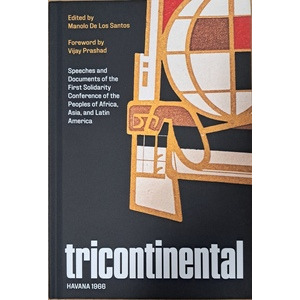
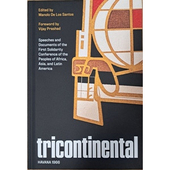
Tricontinental, Havana 1966: Speeches and Documents of the First Solidarity Conference of the Peoples for Africa, Asia, and Latin America
Ed. Manolo de los Santos, 1804 Books, 2026, Hardback
In January 1966, 500 delegates from 82 countries across Asia, Africa and Latin America gathered in Havana, Cuba for the first Tricontinental Conference. Organisers hoped this would “blend the two great currents of world revolution: that which was born in 1917 with the Russian Revolution, and that which represents the anti-imperialist and national liberation movements of today.”
This book collates never-before-published records of the conference’s proceedings.
The Tricontinental Conference marked a high point in the articulation of the Third World project. Consequently, this book offers an opportunity to analyse the strategic thinking of national liberation movements at a time when the US empire had been forced onto the back foot.
£26.50 inc p&p
| Check Basket |
Tricontinental: Havana 1966: Speeches and Documents of the First Solidarity Conference of the Peoples for Africa, Asia, and Latin America
Ed. Manolo De Los Santos, 2026
In January 1966, 500 delegates from 82 countries across Asia, Africa and Latin America gathered in Havana, Cuba for the first Tricontinental Conference. Organisers hoped this would “blend the two great currents of world revolution: that which was born in 1917 with the Russian Revolution, and that which represents the anti-imperialist and national liberation movements of today.”
Collating never-before-published records of the conference’s proceedings, a new publication by 1804 Books, entitled Tricontinental: Havana 1966, edited by Manolo De Los Santos, compiles speeches and documents of what one British consular officer in the Cuban capital considered “the most important communist meeting” of its era.
The Tricontinental Conference marked a high point in the articulation of the Third World project. Consequently, this book offers an opportunity to analyse the strategic thinking of national liberation movements at a time when the US empire had been forced onto the back foot.
“We are not going to eliminate imperialism by shouting insults against it,” Amilcar Cabral reminded conference delegates. The Bissau-Guinean revolutionaryʼs contribution is one of many contained in this new collection to emphasise the importance of the Conference as a means to organise and coordinate revolutionary activity, rather than merely talk about it. Chile’s Salvador Allende, for example, hoped that the Havana gathering would “equip the peoples of the three continents with the strongest tools for action.”
This common aspiration is among the most pertinent themes of Tricontinental: Havana 1966, serving to remind readers of the centrality of constructing internationalist infrastructure. As Cuban Foreign Minister Raúl Roa García acknowledged in his own address, the conference represented a “blow to the backbone of neocolonialism,” not just because it constituted “the highest expression of the solidarity” between Asia, Africa and Latin America, but because it established the Tricontinental Organisation (OSPAAAL), headquartered in Havana just 90 miles from the Florida coast.
OSPAAAL, as Vijay Prashad notes in his foreword, “provides a great foundation for our own sense of solidarity with movements from Palestine to Cuba.” In this sense, the book offers readers far more than revolutionary nostalgia. While the contributions and resolutions contained within its pages may be six decades old, they offer invaluable lessons and insights for today – in unity, struggle and practice.
Tricontinental: Havana 1966 is an important work of archival research, but it also serves as a critical guide for people and movements committed to the struggle for socialism in the face of Washington’s escalating barbarism.
Coll McCail for CubaSi Spring 2026